


CoDiet PhD Student Recongised With Highly Competitive Award
Congratulations to Haozhe Tian, a doctoral student in the Dyson School of Design Engineering at Imperial College London, for receiving an IBM PhD Fellowship Award for the 2025-2026 academic year.
The highly competitive award was established in 1951 to fund research worldwide into promising and disruptive technologies and recognises both the student and the institution. It has been five years since an Imperial student was awarded this fellowship, and three years since the last award to any European institution.
IBM has awarded Haozhe a US$25,000 stipend for the fellowship year, recognising Haozhe’s work to date within the realms of Safe AI and Complex Networks applications of AI, and matches him with IBM mentors as he continues his research.
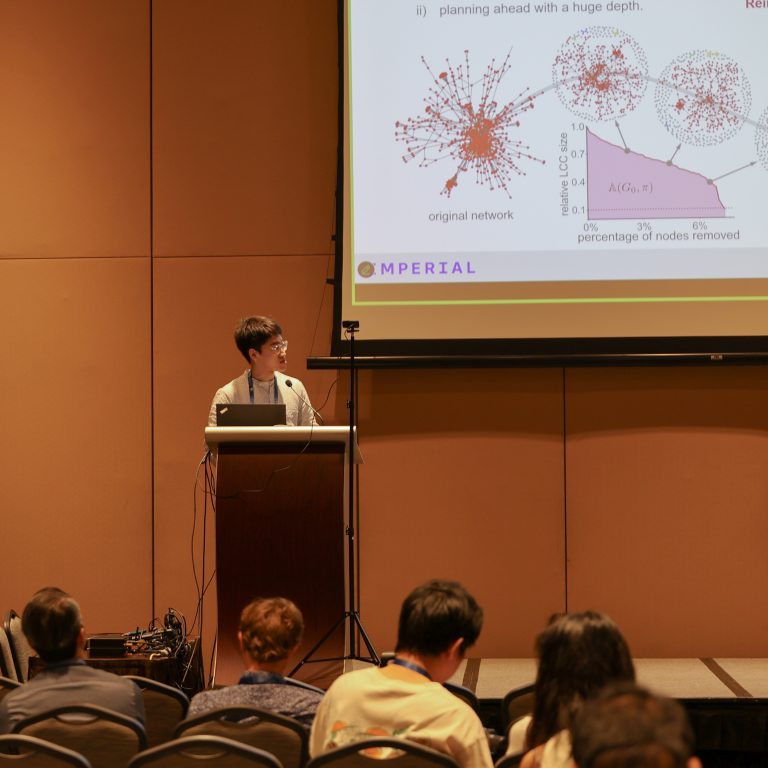
Haozhe is the lead author of three peer-reviewed papers, including one presented at NeurIPS 24 main conference and a recent AAAI contribution selected for oral presentation. Haozhe has been a primary student contributor in the Dyson school to the Horizon Europe project “CoDiet” project, aiming to combat diet-related diseases with innovative monitoring and AI technologies, led at Imperial by the Section for Nutrition Research. Haozhe’s current research seeks intelligent models that can learn the role of geometry in emergent dynamics of complex network systems.
Haozhe’s PhD supervisors, Dr Homayoun Hamedmoghadam and Dr Pietro Ferraro, commented on his incredible acknowledgement:
Haozhe’s research tackles fundamental challenges in applied Artificial Intelligence, particularly those of huge interest in health and medicine. His research output provides both theory and tools at the cutting edge of AI for “safety-critical” and “large learning-space” applications . As a mid-stage PhD candidate with multiple publications in top-tier Machine Learning and AI venues, he has demonstrated exceptional performance. we are very pleased that the significance of Haozhe’s research has been recognized and further supported by the prestigious IBM Fellowship award.
CoDiet Communications Manager, Ally Rayner, spoke with Haozhe about being recognised through this award.
Ally: How did you find out you had been nominated for, and ultimately awarded, the IBM PhD Fellowship Award?
Haozhe: I received the news from my supervisors. They had put me forward for the school nomination and later shared the good news when the school had made the decision to nominate me. It was a pleasant surprise, and I’m very grateful for their support.
Ally: What does the IBM PhD Fellowship Award entail for both you and Imperial?
Haozhe: By nature, the award is a recognition of both the PhD researchers and their institutions. The award grants funding to Imperial that I can use to support my research. I intend to use this for computational power to speed up and scale my work, and also to disseminate the research outcomes.
Ally: Can you briefly describe your role within the CoDiet project and the focus of your research?
Haozhe: I am a student contributor in the Dyson School to the CoDiet project. I work with Dr Pietro Ferraro, Prof Robert Shorten, and Dr Homayoun Hamedmoghadam on developing an AI-driven recommender system for personalised nutrition. My research focuses particularly on the safety aspects of such AI systems. In practice, our system adapts a safe decision-making process toward making specific personalised decisions, as user responses to previous recommendations are observed over time.
Ally: What do you think sets your research apart in such a competitive fellowship scheme?
Haozhe: I would say that a key strength of our research is that it directly addresses the key obstacles to deploying state-of-the-art AI algorithms in real-world settings. In many important AI applications, including health as an important example, besides strong performance, we need guarantees that the AI decisions are safe, attributed to the dire consequences of unsafe decisions. I think the multi-disciplinary theme and the profound implications of the project’s aims played an important role.
Ally: What has been your favourite or most rewarding part of working on CoDiet so far?
Haozhe: The most rewarding aspect has been the opportunity to collaborate with teams across different countries, institutions, and disciplines. Doing AI research with scientists and for users who have diverse backgrounds, speak different languages, and have varied ways of thinking has given me new perspectives on Machine Learning models in general. It also motivates me to pay attention to the accessibility and representativeness issues of AI tools. The new perspectives and the ideas that are formed with them are extremely motivating and exciting to me.
Ally: What advice would you give to others considering undertaking a PhD?
Haozhe: For me, despite its challenges, one of the most rewarding aspects of a PhD is being able to spend several years working in depth on problems that I genuinely find interesting. That level of intellectual freedom and depth in a career stage is quite rare, if not unparalleled.
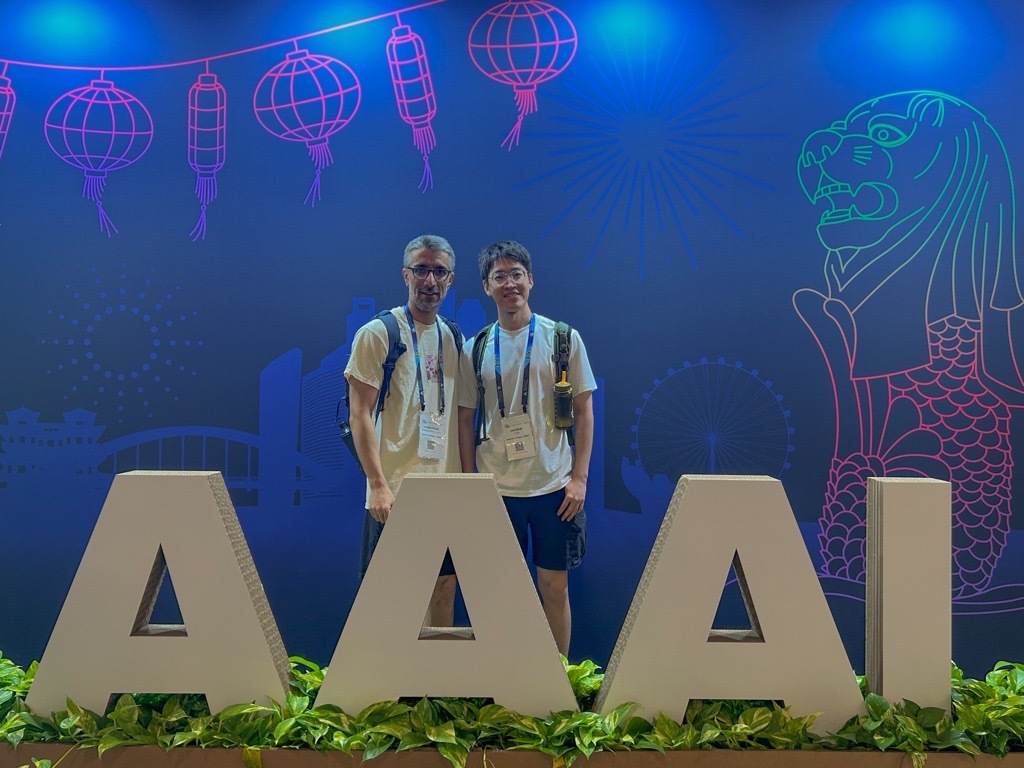
Dr Homayoun Hamedmoghadam with Haozhe Tian at the AAAI Conference on Artificial Intelligence
Scroll to top