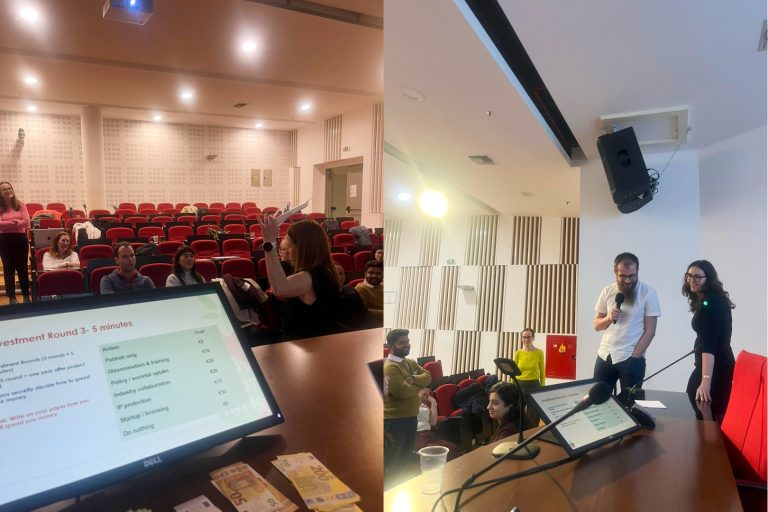



“Fund It or Forget It!”: A Game of Research Impact
The Communication, Dissemination & Exploitation team held an afternoon session at the CoDiet Annual Meeting in Thessaloniki, Greece, to help the consortium understand the European Commission’s (EC) perspective on Impact and Exploitation. The Commission expects to see tangible benefits for society, the economy, and policy. A patent application on its own is not enough. The EC is not funding research simply to generate intellectual property; it is funding research that leads to use.
For project results to create real value, they must be packaged, positioned, and communicated in ways that encourage uptake—whether that’s uptake in a new funding proposal, in a business context, within the scientific community, in public engagement, or in policymaking.
Achieving this requires researchers to think carefully about:
- the tools and formats they use to present their outputs
- the audiences they need to reach
- the ways they communicate their work
- the realistic limits and applications of their methods, tools, and findings
Ultimately, the EC wants projects that don’t just produce results but ensure those results are used, creating meaningful and lasting impact. So to make these points stick, we gamified these important lessons to show that research results that are not exploited (commercially or non-commercially) lose value – exactly how the EC sees it.
Introducing…’Fund It or Forget It!’.
Exploitation Manager for CoDiet, Ivana Balkan, assumed the role of the ‘European Commission’, whilst Communication Manager, Alexandra Rayner, played the role of ‘banker’ (similar to what you’d find in Monopoly). Teams were given €100 each and required to invest their money over a 5-year period in non-commercial and commercial exploitation routes.
With each round of investment, the teams experienced different consequences—some decisions increased the value of their research, while others did not. Teams that chose not to invest in keeping their research results alive quickly saw their value decline. Interestingly, once funding was withdrawn for focusing solely on publications or for failing to engage with policy or industry, teams adapted their strategy in the next round to rebuild their value.
Across three rounds—representing Year 1, Year 3, and Year 5—plus a few unexpected curveballs from the European Commission, each team was ultimately required to pitch their strategy to the room. Teams that explored the full range of exploitation and engagement options were consistently rewarded, showing how a diversified and proactive approach can significantly increase the long-term value of research outputs.
-
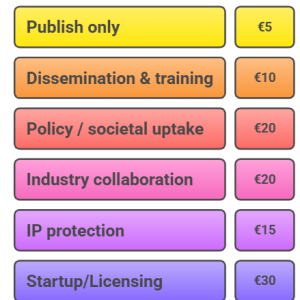
- List of ways teams could invest their money
One team even chose to invest in other projects, effectively becoming an investor to maximise impact when EC funding was limited. Another team attempted to strengthen their reach by proposing a collaboration, incentivised by the promise that both teams would earn €50 from the EU. You’d think it would be an obvious win, but the offer was met with suspicion, and as a result, neither team received the extra €50.
In the end, the teams that made their money work through strategic, forward‑thinking decisions were rewarded and finished with more resources to build on their ideas. That said, the ultimate goal was to spend everything by the final round, one way or another. Everyone managed to do exactly that, albeit by taking very different combinations of commercial and non‑commercial routes.
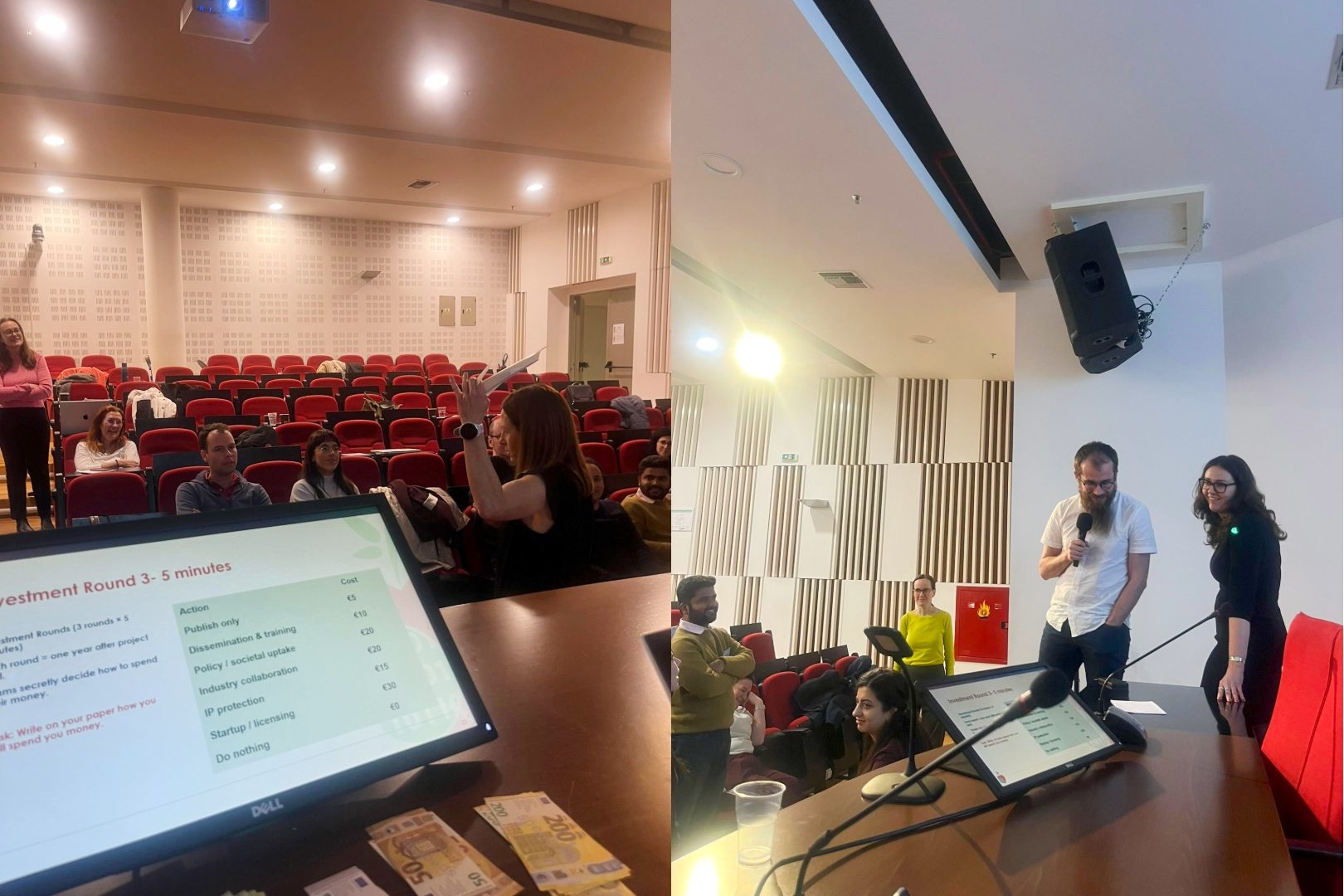
Consortium members taking part in ‘Fund It or Forget It!’ activity
What did we learn?
Researchers may not enter the field for money, but incentives change behaviour. Once they saw that an impact-driven approach could actually increase financial returns so that they can continue to do their work and build on it, their strategy shifted. Introduce incentives, structure, and a bit of competition, and suddenly the room becomes highly motivated to reconsider how they think about their research outputs and how they could be used.
Guest Authors